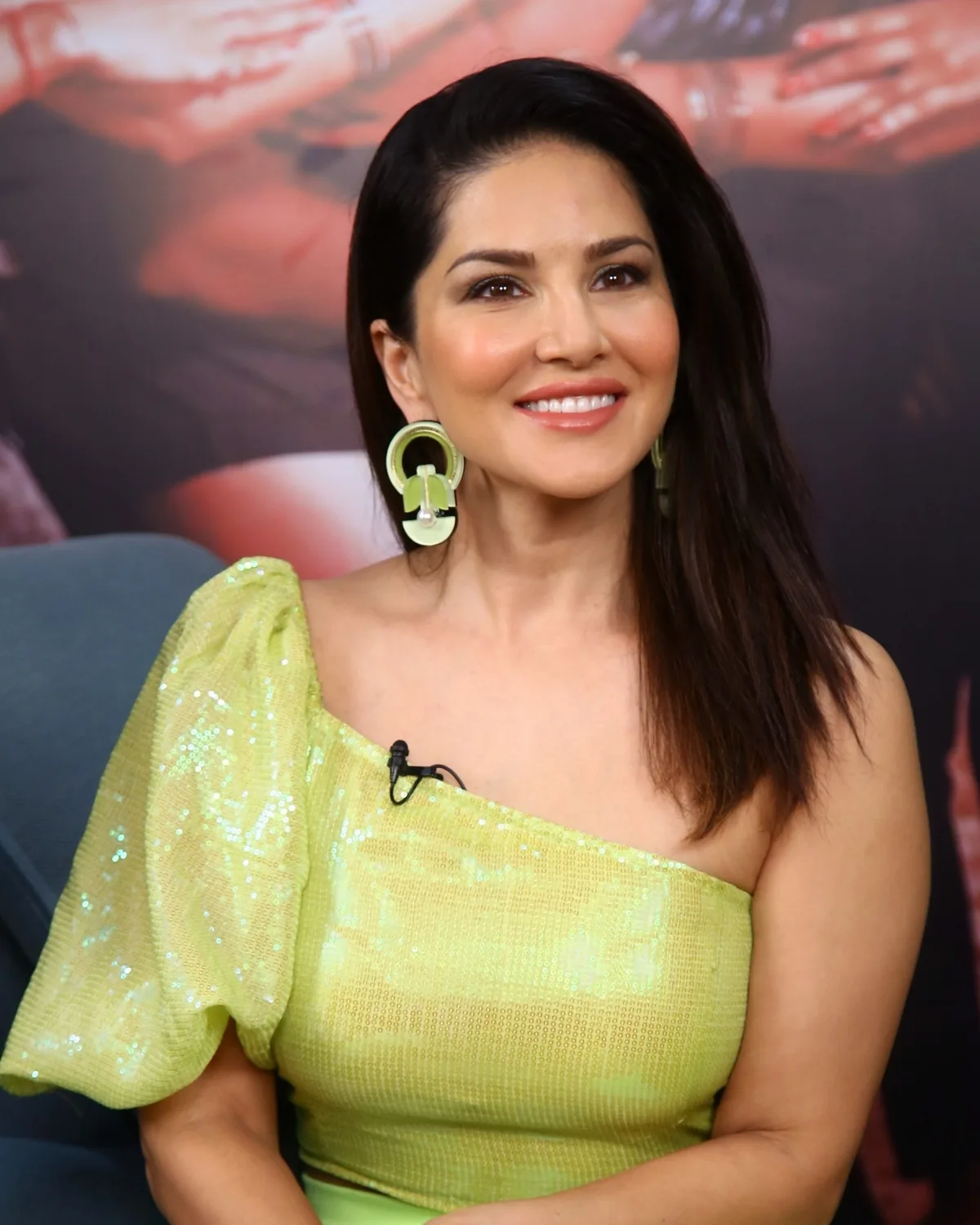
Key facts
- Who: Sunny Leone (born Karenjit Kaur Vohra, May 13, 1981, in Sarnia, Ontario), Canadian-American actress who works in Hindi films (Wikipedia)
- Adult career: Penthouse Pet of the Year 2003; three-year Vivid Entertainment contract from 2005; own studio, Sunlust Pictures, from 2009; AVN Hall of Fame 2018 (Wikipedia)
- The crossover: Entered Bigg Boss 5 in 2011; offered the lead in Jism 2 inside the house by Mahesh Bhatt; Bollywood debut in 2012 (Wikipedia; NDTV)
- Recognition: BBC 100 Women (2016), PETA’s Person of the Year (2016) (Wikipedia)
- Family: Married to Daniel Weber; adopted daughter Nisha in 2017; twin sons born through surrogacy in 2018 (Wikipedia)
Every few months someone in my business tells me they’re going to “cross over”. They’re going to do a mainstream movie, a TV show, a clothing line, and leave the adult label behind. I’ve been in this industry for 14 years. I’m one of the most-searched male performers in the world, and I’ve worked with most of the top actresses of my generation. I can count on one hand the people who actually did it. And I need only one finger to point at the person who did it on the biggest scale: Sunny Leone.
Think about what she did. She went from Vivid contract girl in Los Angeles to a leading lady in Hindi cinema, a TV host, a cosmetics entrepreneur and one of the BBC’s 100 Women — in a country where many people consider pornography a scandal and where, on paper, her past should have closed every door.
People outside the business think she got lucky. I think she was the most strategic performer of her generation. Let me explain why, using the facts — and then I’ll tell you what I think everyone in my industry should learn from her.
Karenjit from Sarnia: the part of the story nobody searches
Sunny Leone was born Karenjit Kaur Vohra on May 13, 1981, in Sarnia, Ontario, to Sikh Punjabi parents. As a girl she was, in her own words, a tomboy who played street hockey with the boys. Her family was Sikh, but her parents enrolled her in a Catholic school because they felt public school was unsafe. When she was 13 the family moved to Michigan, and a year later to Lake Forest, California (Wikipedia).
Before the industry, she had ordinary jobs: a German bakery, a Jiffy Lube, and later a tax and retirement firm. She was studying to become a nurse (Wikipedia).
I love this part of her story, because it’s the opposite of the cliché. People imagine that everyone in adult film was “discovered” in a nightclub. The truth is that most of us come from completely normal lives — retail, restaurants, offices, college classes. A tax firm. An oil change shop. That ordinariness is exactly what gives people like Sunny their edge later, because they know what a real job feels like and they treat this one like a real job.
She has said the name “Sunny” is her real name, and that “Leone” was picked by Bob Guccione, the founder of Penthouse (Wikipedia).
Penthouse, Vivid, and a performer who negotiated everything
Her rise was steady, not explosive. She was Penthouse Pet of the Month in March 2001 and Pet of the Year in 2003. In 2005 she signed a three-year contract with Vivid Entertainment, at the time the most famous studio in the business, and she began with very clearly defined limits on what she would and wouldn’t shoot. When she re-signed with Vivid in 2007, she expanded those limits on her own terms and on her own schedule (Wikipedia).
I won’t go into film details — this is a safe-for-work column — but I want you to notice the pattern, because it’s the most important thing about her adult career. She set boundaries in writing, and she moved them only when she chose to. That sounds simple. In practice, almost nobody does it. New performers usually take whatever is offered, because they’re afraid of losing the next booking. Sunny treated her limits as part of her brand. Scarcity was the strategy.
Her first interactive title for Vivid won her first AVN Award. She was named “Web Babe of the Year” at the 2008 XBIZ Awards. She was a Vivid Girl at the height of the Vivid Girl era, with a holiday billboard in Times Square in 2007 alongside the other contract stars (Wikipedia). If you’ve read my column on Jenna Jameson or on Ginger Lynn, Vivid’s first contract star, you know what that contract meant: you were the face of the company, and you were expected to behave like a brand.
Sunlust Pictures: she became the studio
Here’s the move that, for me, separates Sunny from almost everybody else.
In 2009 she launched her own studio, Sunlust Pictures, with Daniel Weber — later her husband — as her partner. She announced she would write, direct and create her own brand of movies, with Vivid as distributor. She signed deals with multiple companies to sell and distribute her content online, and ran her websites and business interests under her own company, Leone L.L.C. (Wikipedia).
And then there’s a detail I think is pure genius. In an April 2012 interview she said that 80 percent of the traffic on her website, and 60 percent of her revenue, came from India (Wikipedia).
Let that sink in. She knew who her audience was, where they lived and what they spent, because she owned her own data. A contract performer working only for a studio never sees those numbers. The studio sees them. Sunny saw them herself, and she made a career decision based on them. That’s not luck. That’s analytics.
Documentary filmmaker Dilip Mehta later made Mostly Sunny about her, and the Indian Express summarized its subject as a “smart, intrepid entrepreneur, who created her own brand in Los Angeles’s adult entertainment industry by the time she was 28 years old” (Indian Express). I couldn’t have put it better.
Bigg Boss: the risk she almost didn’t take
In 2011 the offer came to appear on Bigg Boss, the Indian version of Big Brother. Her first answer was no.
She explained why to the BBC in 2016: “The company came to me, came to my husband actually, and said there’s a show, it’s like Big Brother, but Big Brother India. Do you want to be a part of it? I said absolutely not. I do not want to go there and work. They will hate me.” She said that, in the past, members of the Indian community had insulted her for her work. Then they sent her the viewership figures. “I thought to myself if I don’t go, this might be one of the biggest career mistakes, I would ever make in my life” (NDTV, reporting the BBC interview).
She entered the house on day 49 of Bigg Boss 5. Wikipedia reports that her Twitter feed gained 8,000 new followers in two days and Google described searches for her as a “breakout”. There were also formal complaints to India’s Ministry of Information and Broadcasting accusing the channel of promoting pornography by putting her on the show. She was evicted on day 91 (Wikipedia).
And in between, the moment that changed her life: filmmaker Mahesh Bhatt entered the house and offered her the lead in Jism 2 (Wikipedia).
I want every performer reading this to notice how she made the decision. Not on emotion. Not on fear. On data — the viewership numbers. The same instinct that made her look at her website traffic made her look at a TV audience and see a door.
Bollywood: flops, hits, and Shah Rukh Khan
Jism 2 came out in 2012 to weak reviews but was a commercial success. Her real breakthrough with critics came with the horror sequel Ragini MMS 2 in 2014, which was a box-office hit; one critic called her work a “revelation” (Wikipedia).
She didn’t win every round. Several of her films were panned or flopped — Wikipedia lists Jackpot, Kuch Kuch Locha Hai and One Night Stand among the disappointments. But she kept working, across Hindi, Tamil, Telugu, Kannada, Marathi, Bengali and Malayalam films, and in 2016 she appeared in “Laila Main Laila”, a song in Raees with Shah Rukh Khan (Wikipedia).
In 2013 she announced her retirement from adult films: “I am lucky that the audience is accepting me. I have come my way from there (porn industry). I don’t have any plans as of now to go back there” (Wikipedia).
Notice the order. She didn’t quit first and then hope for a mainstream career. She built the mainstream career first, proved she could get booked, and only then closed the old door. That’s how you exit without falling.
The backlash she never stopped facing
It would be dishonest to make this sound easy. It wasn’t.
The BBC described her as “a controversial figure”, noting that “some have accused her of destroying Indian culture, even as her videos and movies attract millions of viewers” (BBC). In May 2015, a police First Information Report was filed against her in Thane after a woman complained that her website was destroying Indian culture (Wikipedia). Politicians and actors’ groups had complained about her TV appearance years earlier.
And yet she has spoken about the industry she left with surprising fairness. In the BBC interview she compared the two worlds: “I was never questioned about who I was, my sexuality, my integrity as a woman, sexism on set, anything, in the adult entertainment industry. Not once” (NDTV).
I’ll be honest: that quote made me proud. Not because adult film is perfect — I’ve written plenty about its problems, from Lana Rhoades’ story of pressure on set to Linda Lovelace’s ordeal. But because Sunny’s experience shows what a well-run, boundary-respecting career in this business can look like, when the performer holds the pen.
On the question everyone asks, objectification, she gave an answer that only someone from our world would give: “I don’t see the word ‘objectification’ as a bad word. We all objectify things and products and people to sell the product we wish to sell. For me sometimes, it is selling brand ‘Sunny Leone’” (NDTV).
You can disagree with that. Many feminists do. But you can’t say she doesn’t understand her business.
Author, activist, mother
Her life outside film is fuller than most people realize.
In 2016 she published Sweet Dreams, a collection of 12 short stories released one per night on the Juggernaut Books app, followed by a paperback. Reviews were mixed — Elle made it Book of the Week, while other critics were unimpressed (Wikipedia).
She has posed for PETA campaigns encouraging people to spay and neuter their pets, and PETA named her its Person of the Year in 2016. That same year she was named one of the BBC’s 100 Women (Wikipedia). She told PTI she found it surprising: “I wasn’t expecting that. It was surprising. It’s an honour to be on the list” (Bollywood Life, quoting PTI).
In July 2017 she and Daniel Weber adopted their first child, a 21-month-old girl from Latur in Maharashtra, whom they named Nisha Kaur Weber. In March 2018 they announced the birth of twin boys, Asher and Noah, through surrogacy. In 2018 ZEE5 released a biographical web series about her, Karenjit Kaur – The Untold Story of Sunny Leone (Wikipedia).
The adoption moved me. Weber told the Hindustan Times: “Never in my life did I think that I want to adopt a child. People doing such amazing work at the orphanage changed my mind” (Wikipedia). For a woman whom some people accused of corrupting a culture, choosing to give a home to a little girl from a village in that same country says more than any review.
The partner question
One last thing that most coverage glosses over. From Sunlust Pictures onward, Sunny’s career was a partnership with Daniel Weber — co-founder, then husband, then the person who fielded the Bigg Boss offer and, she said, the person who helps her through bad days when a movie fails (Bollywood Life).
I’ve seen a lot of couples in this industry. Some partnerships are protective. Some are exploitative, as Linda Lovelace’s story reminds us. From everything on the public record, Sunny’s looks like the first kind: two people building a business, with her name on the door and her decisions driving it.
What my industry should learn from Sunny Leone
- Boundaries are a brand. She set limits in writing and moved them on her own timeline. Scarcity made her more valuable, not less.
- Own your data. She knew 80 percent of her web traffic came from India. Without that number, there’s no Bollywood chapter.
- Build the next career before you leave the current one. She announced her retirement after the mainstream work started, not before.
- Take the scary meeting. She almost said no to Bigg Boss. Look at the numbers before you let fear decide.
- Expect backlash, and outlast it. Complaints, police reports, insults. She kept showing up to work.
If you’re interested in other performers who crossed into mainstream fame in Asia, read my column on Sora Aoi, whose fame in China followed a similar pattern. And for the most famous American crossover attempt of all, see Sasha Grey.
My Take (opinion — Maximo Garcia)
Sunny Leone is the most successful crossover my industry has ever produced, and it wasn’t an accident. A nursing student from a small Canadian town learned the business from the inside, set her own limits, built her own studio, read her own numbers, took a reality-TV gamble she was terrified of, and walked into a film industry that was never supposed to accept her. Then she kept working through flops, protests and police complaints until she became one of the BBC’s 100 Women.
After 14 years in this business, I’ve learned that talent gets you noticed, but strategy keeps you alive. Sunny had both, and she used the strategy first. Whenever a young performer tells me they’re going to “cross over”, I tell them to study her — not the glamour, the spreadsheet.
I write about the business side of this industry, and my own work, at maximogarciaworld.com.
👉 More from me at maximogarciaworld.com · Want the full collection? Subscribe at fuckingpornstars.net
FAQ
How did Sunny Leone get into Bollywood?
While she was a contestant on Bigg Boss 5 in 2011, filmmaker Mahesh Bhatt entered the house and offered her the lead in Jism 2, her Bollywood debut in 2012 (Wikipedia; NDTV).
What is Sunny Leone’s real name?
Karenjit Kaur Vohra. She was born on May 13, 1981, in Sarnia, Ontario, to Sikh Punjabi parents (Wikipedia).
When did Sunny Leone leave the adult industry?
She announced her retirement from adult films in 2013, saying she had no plans to go back (Wikipedia).
Was Sunny Leone on the BBC 100 Women list?
Yes, she was named one of the BBC’s 100 Women in 2016 (Wikipedia; NDTV).
How we fact-checked this
Every fact and quote was checked against the sources below. Quotes appear as the sources reported them; complaints and legal matters are attributed, and anything we could not confirm was left out. Opinions are Maximo Garcia’s own and are labeled as such.
Sources
- Wikipedia: Sunny Leone — https://en.wikipedia.org/wiki/Sunny_Leone
- BBC News: “100 Women 2016: Sunny Leone on how objectification isn’t a bad word” — https://www.bbc.com/news/av/world-asia-india-38240319
- NDTV: “Why Sunny Leone Doesn’t Think Objectification Is A ‘Bad Word’” (Dec 2016) — https://www.ndtv.com/entertainment/why-sunny-leone-doesnt-think-objectification-is-a-bad-word-1635683
- The Indian Express: “Sunny Leone: I believe each woman should make her own decisions” (2017) — https://indianexpress.com/article/entertainment/bollywood/sunny-leone-motherhood-the-controversial-netflix-documentary-bollywood-4845350/
- Bollywood Life: Sunny Leone reacts to BBC 100 Women list (PTI interview) — https://www.bollywoodlife.com/news-gossip/sunny-leone-reacts-on-being-featured-in-bbcs-100-most-influential-women-list-857424/