Key facts
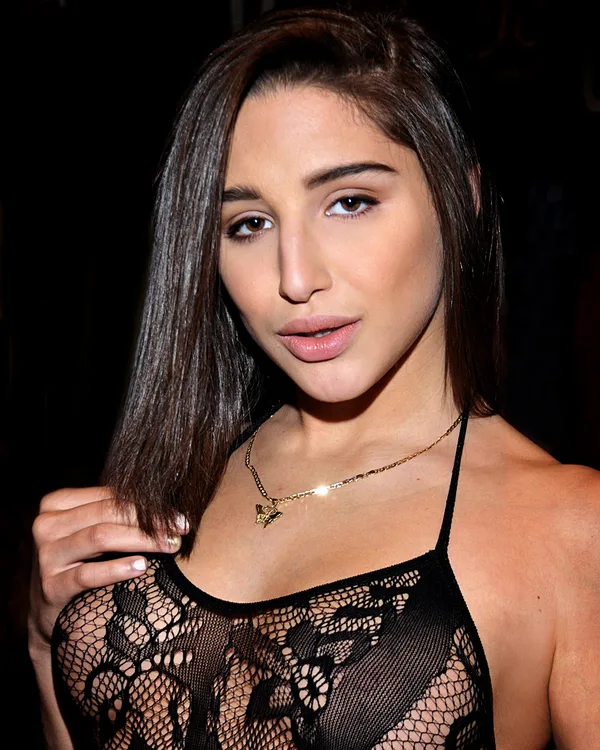
- Who: Amarna Miller (born October 29, 1990, in Madrid), Spanish YouTuber, writer and former adult actress, producer and director (Wikipedia)
- Education: Fine-arts degree from the European University of Madrid, specializing in photography (El País, 2019)
- Career: Started at 19 with her own production company, Omnia-X, which she ran for five years; once the most-searched actress among Spanish users of Pornhub (Wikipedia; El País, 2019)
- Exit: Stopped shooting in 2017, without any public announcement (El País, 2019)
- After: YouTuber, TV presenter, author of Manual de psiconáutica (2015) and Vírgenes, esposas, amantes y putas (2021) (Wikipedia; El País, 2021)
There’s a type of performer that people outside this industry don’t believe exists. Educated, articulate, political, artistic, in the business because she chose it and not because she had nowhere else to go — and brutally honest about its flaws. When someone like that appears on a talk show, audiences get confused. They don’t know which box to put her in.
Amarna Miller is that performer. I’ve been in this business for 14 years. I’m one of the most-searched male performers in the world, and I’ve worked with most of the top actresses of my generation. I’ve met very few people who could explain this industry — its freedom and its precariousness at the same time — as clearly as she has.
She’s also a rare case in another way. She left without a scandal, without a dramatic statement, without a conversion story. She just stopped, and started building something else. That quiet exit is worth studying. So here’s her story, with the facts, and then my honest take.
Marina from Vallecas: a lonely, bookish childhood
Amarna Miller’s real first name is Marina. She grew up in Vallecas, a working-class neighborhood of Madrid, an only child. In a long 2019 interview with El País, she described a childhood without television — her parents didn’t allow it — filled instead with books, board games and museums. She was bullied, and for years she didn’t know how to relate to other children (El País, 2019).
“My childhood and my school years were very complicated because my parents are very unusual,” she said (our translation from Spanish). “They encouraged my intellectual side a lot, but I lacked contact with the world… I was the weird girl at school. But I ended up overcoming those obstacles and all of this turned me into a strong and independent person” (El País, 2019).
Her stage name tells you everything about that girl. It combines Amarna, the ancient Egyptian site on the Nile, with the surname of the American novelist Henry Miller, whom she has read devotedly since she was a teenager (Wikipedia; El País, 2019). She went on to study fine arts at the European University of Madrid, specializing in photography, and for years she wrote a blog almost daily (El País, 2019).
I want to point out something she said about how she learned what sex was, because it says a lot about why so many people end up with strange ideas about it. Her parents gave her no sex education, she said, and changed the channel whenever anything suggestive appeared on TV. “In a hidden way, what that was teaching me was that there was something bad there, but I didn’t know what” (our translation) (El País, 2019).
That silence is exactly the gap that my industry ends up filling for millions of young people — and as you’ll see, she has strong opinions about that.
Her own studio at 19
Here’s what makes her different from almost every performer I know: she didn’t start by working for someone else. She started as the boss.
Miller entered the industry at 19 and ran her own production company, Omnia-X, for five years (Wikipedia). El País reported that she debuted in a film she directed and produced herself (El País, 2021).
And she was very clear about why she came in. According to El País, she didn’t start out of need; she started because she wanted to, having long been curious about sex work (El País, 2019).
I’ll be honest: when I hear “her own company at 19”, the professional in me is impressed and the cautious part of me is worried. Impressed, because owning your production means owning your rights, your image and your decisions — the single most important protection in this business. Worried, because running a company at 19 means carrying all the risk yourself. She did it for five years. That’s a serious achievement.
She went on to win the Ninfa Award for Best Actress of the Year in 2014, Best Personal Website in 2015 and 2016, and the TEA Award for Best Female Performer in 2017. She was nominated twice for the AVN Female Foreign Performer of the Year award (Wikipedia). And according to El País, at her peak she was the actress most searched by Spanish users on Pornhub (El País, 2019).
“Ethical porn” — and the honesty about the rest
Amarna became one of the best-known advocates of what’s called ethical or feminist pornography: work made in a safe, healthy, consensual environment where performers are treated with respect and as equals (El País, 2019).
But here’s why I trust her: she never pretended that was the whole industry. Wikipedia quotes her acknowledging that she worked in “an industry made by and for men”, and that “if I only shot feminist porn, I would not pay half a bill.” She has also said that performers’ rights are not respected in most countries outside the United States (Wikipedia).
That’s the most honest sentence I’ve ever read from an ethical-porn advocate. The ideal exists. It doesn’t pay the rent on its own. So you do the work you believe in and the work that pays, and you try to keep the second kind from swallowing the first. Every performer I respect lives with that tension.
On money she was even more direct. Asked on television how much she had in the bank, she answered 15,000 euros. “Whatever idea people may have of what a porn actress earns is infinitely nothing compared to what a conventional actress earns for appearing 20 minutes in a TV series. It’s a precarious industry… It’s not easy money,” she told El País (our translation). The paper added that the lack of regulation she described translates into abusive contracts in which performers have no control over where their scenes end up, how their image is used, or the name they’re credited under (El País, 2019).
She’s right. I’ve said the same thing about Lana Rhoades’ lost rights and Crissy Moran’s fight to take her content down. Different countries, different decades, the same problem: the performer signs once and loses control forever.
A campaign that won a Cannes Lion
In 2016 she was the face and voice of a controversial ad for the Barcelona Erotic Salon. Called Patria (“Homeland”), it criticized Spanish double standards about sex and ended with the line: “We live in a disgustingly hypocritical country, but some of us do not give up.” The ad won a Silver Lion at the Cannes Lions festival (Wikipedia).
She appeared on mainstream Spanish TV, including Andreu Buenafuente’s Late Motiv and David Broncano’s La Resistencia, presented Diario Vice on Movistar+, and was on the cover of Interviú in 2014 and 2016. In 2016 she debated “Sex, porn and feminism” with two Podemos deputies, arguing that pornography cannot be used for sex education — a position that, Wikipedia notes, was not well received by some feminist groups (Wikipedia).
That last point is the one I’d underline for every parent reading this. A performer — someone who made her living from adult films — publicly arguing that porn is not sex education. She told El País that teenagers need to hear that what they find online about sex “is extremely biased,” and that “the line between fiction and reality on the internet is very blurry” (our translation) (El País, 2019). I agree 100%. What we make is entertainment, performed by professionals, edited and lit. It’s not a manual. Anyone who learns about intimacy from it is learning from fiction.
The relationship she survived
In 2019 El País reported that a year after leaving her parents’ home at 19, she suffered abuse from a partner — a relationship she later described in a 45-minute YouTube video. “Getting out of it was like getting out of an addiction, like getting off heroin,” she said. She described it as emotional and psychological manipulation so subtle that she didn’t call it abuse until long after she left: “My abuser was a velvet glove” (our translation) (El País, 2019).
She made the video, she explained, because friends couldn’t understand how it could happen to someone so independent. Her answer: the brainwashing an abuser does “is so brutal that it cancels you out” (El País, 2019).
I’m including this because people assume the danger in this industry is only on set. Sometimes the most dangerous person in a performer’s life is at home. And performers, because of the stigma, often have fewer people to turn to. If you recognize yourself in her story, talk to someone you trust, or a local domestic-violence helpline.
Leaving: “I didn’t see myself as a porn actress at 40”
In 2017 she stopped shooting. She made no announcement (El País, 2019).
Her explanation is the most honest exit quote I’ve ever read, and I’m putting it here in full (our translation): “I left porn because I burned out. The first years, it was a hobby for me. Then it became a job, but a job I really liked, that I was excited to go to. And, at a certain point, when I thought about leaving, it started to be a job I didn’t feel like going to. I decided to take a break, and when I stopped I realized I didn’t just want to stop. I wanted to quit. I didn’t see myself as a porn actress at 40, so I knew this moment would come sooner or later” (El País, 2019).
In 2021 she told the same paper that it happened gradually: “It wasn’t an epiphany or anything like that.” Shooting had simply stopped being “a challenge” (our translation) (El País, 2021).
No conversion. No villain. No breakdown. Just a professional who noticed she no longer wanted to go to work, and listened to herself. I’ve rarely seen anyone describe it so clearly — and I’ll tell you a secret: that feeling she describes is the most common reason people leave this business. It just doesn’t make headlines.
A second life: van, YouTube, books
After leaving, she starred in her first conventional feature film, Contigo no, bicho, which premiered at the Málaga Film Festival in 2017 (Wikipedia). In 2017 she was also seriously injured in a motorcycle accident abroad, needing surgery and a blood transfusion (Wikipedia).
She traveled, lived in a van while crossing the United States, and became a YouTuber, talking about sustainability, ecology, stigma and alternative lifestyles; El País reported she funded the channel through Patreon supporters (El País, 2019; Wikipedia).
She’d already published Manual de psiconáutica in 2015, a book of poetry and photography with a prologue by filmmaker Nacho Vigalondo (Wikipedia). In 2021 she published the essay Vírgenes, esposas, amantes y putas (“Virgins, Wives, Lovers and Whores”) with Espasa, which El País described as a kind of personal exorcism, written in the first person, that served her as therapy (El País, 2021).
And she kept her name. “I’m proud of having been a sex worker, that’s why I haven’t changed my name: I’m still Amarna Miller, the name I used when I entered porn” (our translation). In the same breath she admitted: “Having worked in porn is a stigma that will be with me my whole life” (El País, 2019).
She summed up the real problem in 2021: “The worst thing about porn has nothing to do with porn, but with how society understands sex and the constant stigma you have to face” (our translation) (El País, 2021).
What every performer should learn from Amarna Miller
- Own your production if you can. She started as her own producer; that’s control from day one.
- Be honest about the economics. Ethical ideals don’t pay every bill. Plan accordingly.
- Listen to the moment you stop wanting to go to work. That’s your exit signal. Don’t ignore it for a few more paychecks.
- Build a voice outside the industry. Her blog, her art, her books and her channel all existed before she left.
- Don’t let stigma rename you. Keeping her name was a statement. It’s one I respect.
For more stories of performers who left and reinvented themselves, read my columns on Stoya, another writer and founder, and Nikita Bellucci, the French star who also fought for ethical working conditions.
My Take (opinion — Maximo Garcia)
Amarna Miller is one of the clearest thinkers my industry ever had. She came in by choice, started as her own boss, built a reputation on ethical work while admitting that ethical work alone didn’t pay the bills, and spoke more honestly about money, contracts and stigma than almost anyone. Then she left exactly the way she said she would: when the job stopped feeling right, without drama, with a plan for the next life already half-built.
After 14 years in this business, I can tell you that the performers who survive emotionally are the ones who treat it like she did: as a chapter, not an identity; as a job with real risks, not a fantasy. And I agree with her final point most of all. The worst part of this work isn’t the work. It’s how the world treats you for having done it.
I write about the realities of this job — the good and the bad — at maximogarciaworld.com.
👉 More from me at maximogarciaworld.com · Want the full collection? Subscribe at fuckingpornstars.net
FAQ
Who is Amarna Miller?
A Spanish writer, YouTuber and former adult actress, producer and director, born in Madrid in 1990, with a fine-arts degree from the European University of Madrid (Wikipedia; El País).
Why did Amarna Miller leave porn?
She told El País she gradually burned out: it went from a hobby to a job she loved to a job she no longer wanted to go to, and she couldn’t see herself still doing it at 40 (El País, 2019).
What books has Amarna Miller written?
Manual de psiconáutica (2015), a mix of poetry and photography, and the essay Vírgenes, esposas, amantes y putas (Espasa, 2021) (Wikipedia; El País, 2021).
Where does the name Amarna Miller come from?
It combines Amarna, the ancient Egyptian site on the Nile, with the surname of writer Henry Miller, whom she has read since she was a teenager (Wikipedia; El País, 2019).
How we fact-checked this
Every fact and quote was checked against the sources below. Quotes originally given in Spanish are our own translations and are marked as such; anything we could not confirm was left out. Opinions are Maximo Garcia’s own and are labeled as such.
Sources
- Wikipedia: Amarna Miller — https://en.wikipedia.org/wiki/Amarna_Miller
- El País (ICON): “Cómo es la vida de la española Amarna Miller después de dejar el porno” (March 7, 2019) — https://elpais.com/elpais/2019/02/18/icon/1550503023_181017.html
- El País: “La reinvención de Amarna Miller: del porno al activismo” (2021) — https://elpais.com/gente/2021-02-03/la-reinvencion-de-amarna-miller-del-porno-al-activismo.html