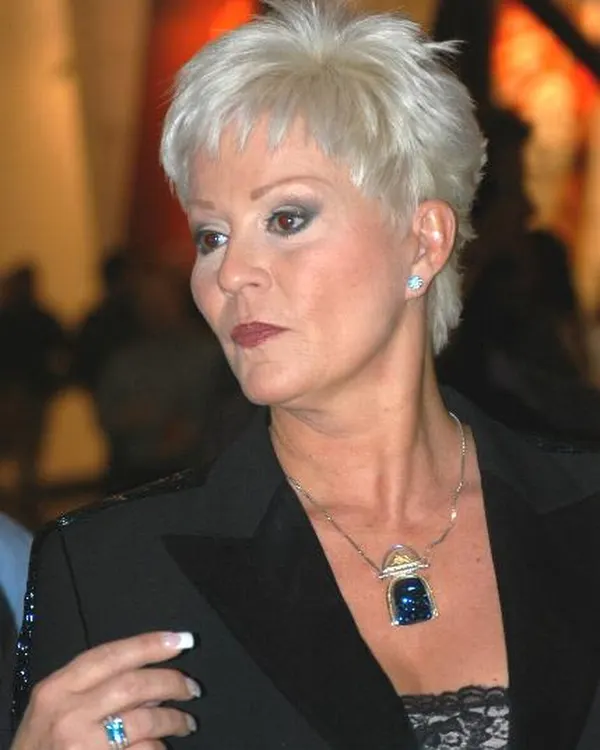

Key facts
- Who: Sharon Mitchell, American former adult performer and director, later a sexologist, born 1957 or 1958 (Wikipedia)
- Before porn: Off-Broadway actress and dancer who toured with the Martha Graham company (The New York Times)
- Career: About 1,000 adult films in 20 years, 38 as director (The New York Times)
- Turning point: Attacked in 1996 by a man obsessed with her films; she quit drugs and went back to school (The New York Times; Associated Press via HeraldNet)
- Legacy: Founded AIM in 1998, which tested about 1,200 performers a month by 2004 (The New York Times)
- End: AIM closed in 2011 after a data leak and a privacy lawsuit (XBIZ; NBC Los Angeles)
If you search “Sharon Mitchell AIM clinic,” you’ll find two very different women in the results. One is a 1970s and 80s adult star with around a thousand films. The other is “Dr. Mitchell,” the woman in the white coat who, in 2004, was the most important person in the San Fernando Valley during an HIV outbreak. They are the same person, and the path between them is one of the most remarkable stories our industry has.
I’ve been in this industry for 14 years. I’m one of the most-searched male performers in the world, and I’ve worked with most of the top actresses of my generation. The system of regular testing that I and everyone I know grew up with didn’t fall from the sky. Someone had to build it, and for the first 13 years of it, that someone was Sharon Mitchell. Here’s her sourced story, then my take.
A Catholic girl, a dancer, a new name
Mitchell was adopted and raised as an only child in a Roman Catholic family in the farm country of Monmouth County, New Jersey (The New York Times). She told the Associated Press that she grew up in a “wonderful and loving” family (Associated Press via HeraldNet). She married briefly at 17 (The New York Times).
Before adult film she was a performer in the most serious sense of the word: an Off-Broadway actress and a dancer who toured with the Martha Graham company (The New York Times). In 1975 she legally changed her last name in homage to Martha Mitchell, the outspoken wife of Nixon’s Attorney General John N. Mitchell (The New York Times).
According to the AP, she took her first adult role after Off-Broadway jobs didn’t pay much. She said she had no qualms about it at the time, and the AP added a detail that explains a lot about that era: nobody had even heard of AIDS (Associated Press via HeraldNet).
A star of the 1970s New York scene
She started in the mid-1970s. The Times described her first sight of herself on a cinema screen as “a radical, liberating rupture from her upbringing.” “I was quite proud,” she said of seeing herself 16 feet high (The New York Times).
Over about 20 years she made some 1,000 films and directed 38 of them. She also had small parts in mainstream movies like Tootsie and The Deer Hunter, and played a nurse on the soap opera The Edge of Night (The New York Times). She was the subject of Kamikaze Hearts (1986), a vérité film by Juliet Bashore that followed her behind the scenes (Wikipedia). In 1993 she received the Free Speech Coalition Lifetime Achievement Award, and she is in both the AVN and XRCO Halls of Fame (Wikipedia).
Heroin, and a job that wore her down
The glamorous part is only half of it. Mitchell has been open about a heroin addiction that, she told the Times, lasted nearly two decades; the AP described it as a 16-year habit (The New York Times; Associated Press via HeraldNet). “People I worked with knew I was an addict,” she said. “I never felt it necessary to hide it” (The New York Times).
She was honest about why. Working in the sex industry was exhausting, she said, and the drug helped her cope: “The trauma on the body is too much and the whole thing created personal problems, relationship problems” (The New York Times).
Health in those years was mostly luck. “The worst thing you could get in those days was crabs or herpes, and that was few and far between,” she told the Times (The New York Times).
1996: the attack that changed everything
In March 1996, after a shift at a strip club, Mitchell was attacked at her front door by a man who had become obsessed with her films. The New York Times reported that he beat and raped her and nearly killed her, and that she managed to knock him out with a dumbbell. She then recognized him as a man who had heckled her at the club earlier that night (The New York Times).
Her own words about what came next are the heart of this story. “That was the wake-up call from the universe, the moment of clarity,” she told the Times. “I didn’t want to be standing on the side of a freeway some day, holding a cup” (The New York Times). To the AP she said the attack “did something to me,” and that she was soon “running for rehab and college as fast as I could” (Associated Press via HeraldNet).
She got clean, became a certified addiction counselor, and earned a master’s and a PhD from the Institute for Advanced Study of Human Sexuality in San Francisco, while working jobs that included caterer, florist, dog walker and maid (Wikipedia; Associated Press via HeraldNet).
1998: “These are my friends”
Then the industry came looking for her. In 1998, while she was studying public health, an HIV scare hit the business and testing was patchy. People in the industry asked Mitchell to look into it (Associated Press via HeraldNet).
“I started testing everyone,” she told the AP. “I had been out of porn for a good two years, maybe three. I did not want to come back for anything. But I thought, these are my friends” (Associated Press via HeraldNet).
That became the Adult Industry Medical Health Care Foundation, AIM, founded in January 1998 (The New York Times). It was co-founded with internist Dr. Steven York, according to NBC Los Angeles (NBC Los Angeles). LAist later noted that AIM was known for speedy results and for a database the industry could check to verify a performer’s clean bill of health (LAist).
By 2004, the AP reported, the foundation had a $1.4 million annual budget, most of it paid by performers, with nine full-time staff, and typically ran a $7,000 monthly deficit (Associated Press via HeraldNet). The Times reported AIM was testing about 1,200 performers a month (The New York Times).
2004: the outbreak
In spring 2004 an HIV outbreak stopped the industry. The Times reported that the virus was traced to a male performer who had apparently been infected while working on a film in Brazil and who passed it on to at least three actresses in Los Angeles (The New York Times). AIM’s testing detected it, and Mitchell called for an immediate halt to filming (The New York Times; Associated Press via HeraldNet). Her clinic traced the contacts between the first two performers who tested positive and almost 60 other performers, and the AP reported a voluntary quarantine of 53 people and an estimated 80 percent of the industry halting production (Associated Press via HeraldNet).
“Everyone’s been contained,” she told the Times. “If we had not put everyone on quarantine so early, this would really have spread” (The New York Times).
The Times described her as part doctor, part detective. When one performer on the exposure list ignored requests to be tested, Mitchell and her assistants tracked her down in Las Vegas and offered her $500 in cash to take the test. She accepted. “Whatever works, right?” Mitchell said (The New York Times).
Her frustration was with her own side. “This is a very difficult population to deal with,” she said. “I’ve had to battle more within the industry than without” (The New York Times). The sign on her office door read: “Well-behaved women rarely make history” (The New York Times).
Praise, criticism and the condom question
The AP noted that while Mitchell had critics, many in the industry credited her with making it take HIV seriously as an occupational hazard. The producer Suze Randall said: “She’s trying so hard to keep this ragtag bunch of hooligans together in this industry” (Associated Press via HeraldNet). Peter Kerndt, who ran Los Angeles County’s STD program at the time, said she “genuinely cares about people that come into this industry,” while adding: “Obviously more needs to be done” (Associated Press via HeraldNet).
The hard question was always condoms. In 2004 the AP reported that she opposed government-mandated condom rules, arguing they would push the industry underground (Associated Press via HeraldNet). But in a 2007 NPR interview, asked why actors weren’t simply required to use them, she answered: “Wouldn’t that be wonderful?” She explained the pressure on performers: “They’re offered more money; they’re told, look, these films will not sell if there are condoms on it” (NPR).
She was blunt about how the business saw performers: “They’re looked at as commodities; they’re looked at as body parts that are going to be edited into a product that’s going to make money” (NPR). And about the culture: “Denial is the backbone of pornography when it comes to health care” (NPR).
“Sweeping back the ocean with a broom”
The NPR interview also shows how much the work cost her emotionally. “Some days I feel like I’m sweeping back the ocean with a broom,” she said. “We do catch a tremendous amount of HIV that would have ended up in the industry, and I can literally say that I save lives. We’ve put a lot of people into rehab, we help a lot of people leave porn and get an education, we have a scholarship program” (NPR).
She also gave advice to newcomers that I wish every agency printed on its contracts: “We really want you to have thought about why you’re doing this. Is it for the sex, the money or the attention?” (NPR). Anyone planning a career in teaching, she warned, should “really think long and hard about this because this is something that will follow you around” (NPR).
2011: the leak and the end of AIM
AIM’s end was messy. In early 2011, the AIDS Healthcare Foundation publicly raised questions about AIM’s licensing, which led to a shutdown (Wikipedia; California Healthline). Then a website called Porn Wikileaks published performers’ personal information, real names and test results, and the Free Speech Coalition said it soon learned that AIM’s database had likely been hacked (LAist; XBIZ). Wikipedia puts the leak at the real names and test results of more than 12,000 performers (Wikipedia).
Two performers sued AIM for breach of medical records (XBIZ). In May 2011, AIM closed and filed for bankruptcy. Mitchell said the closure was due to “financial hardship” (California Healthline; LAist). The Free Speech Coalition, the industry’s trade group, later took over oversight of the testing system (Wikipedia).
The critics had their say too. AIDS Healthcare Foundation president Michael Weinstein said testing “has never been an effective substitute for safer sex and condom use” (LAist).
What every performer should learn from Sharon Mitchell
- Your health is your career. Test, keep records, and never assume someone else checked.
- Know why you’re here. Her question: sex, money or attention? Answer it honestly before your first scene.
- Addiction is an occupational hazard. She said so openly; we should talk about it as openly.
- It’s never too late to start again. She went from rock bottom to a PhD.
- Privacy is safety. The 2011 leak shows why performers’ data must be protected.
My Take (opinion — Maximo Garcia)
I started in this business long after AIM was gone, so I never met Sharon Mitchell and I won’t pretend I did. But I can tell you what her story means from inside. Every time I’ve shown my test results before a scene, every time a producer has checked a database instead of just trusting someone’s word, I’ve been living in a system whose basic idea she pushed when almost nobody else would. That idea is simple: in this job, your health is everybody’s business, and somebody has to be in charge of it.
What hits me hardest is her line: “these are my friends.” She had escaped. She’d been through the worst thing that can happen to a person, she’d got clean, she was studying, and she went back to the place that had hurt her because people she cared about were in danger. Paying a performer $500 to get tested, chasing her to Las Vegas — that’s not glamorous public-health work. That’s a person who knows exactly how performers think, because she was one.
I also don’t want to make her a saint, and neither did she. Her own words about performers being treated as “commodities” and “body parts” are hard to read, and they’re not completely out of date. The AIM data leak is a warning that any system that holds our real names and medical results can hurt us if it fails. Both things are true: she built something that saved lives, and it ended badly. That’s real life. I write more about health, money and the parts of this job nobody talks about at maximogarciaworld.com.
If her story moved you, read my column on Nina Hartley, the registered nurse who became a sex educator, and on Ginger Lynn, another Golden Age star who survived a serious health battle. For the era Mitchell came from, see my column on Seka.
👉 More from me at maximogarciaworld.com · Want the full collection? Subscribe at fuckingpornstars.net
FAQ
What is the AIM clinic Sharon Mitchell founded?
The Adult Industry Medical Health Care Foundation (AIM), founded in 1998, provided STD and HIV testing, information and counseling for adult performers. By 2004 it was testing about 1,200 performers a month (The New York Times; Associated Press via HeraldNet).
Is Sharon Mitchell a real doctor?
She earned a master’s degree and a PhD in human sexuality from the Institute for Advanced Study of Human Sexuality in San Francisco and worked as a sexologist; she also became a certified addiction counselor (Wikipedia; NPR).
Why did the AIM clinic close?
AIM closed in May 2011 and filed for bankruptcy after licensing problems, a leak of performers’ private data and a privacy lawsuit (XBIZ; NBC Los Angeles; LAist).
How many films did Sharon Mitchell make?
About 1,000 adult films over a roughly 20-year career, including 38 she directed (The New York Times).
How we fact-checked this
Every fact and quote was checked against the sources below, and quotes are reproduced as published. The 1996 assault is described only as far as Mitchell herself discussed it with The New York Times and the AP, without graphic detail. Positions on AIM’s record and on condom rules are attributed to the people who stated them. Explicit film titles and scene details were left out to keep this page SFW. Opinions are Maximo Garcia’s own and are labeled as such.
If you or someone you know has experienced sexual violence, in the U.S. you can reach RAINN’s National Sexual Assault Hotline at 1-800-656-4673; elsewhere, contact your local emergency number or support service.
Sources
- Wikipedia: Sharon Mitchell — https://en.wikipedia.org/wiki/Sharon_Mitchell
- The New York Times: “Voice of Health in a Pornographic World” (May 10, 2004, archived) — https://web.archive.org/web/2016/https://www.nytimes.com/2004/05/10/us/voice-of-health-in-a-pornographic-world.html
- Associated Press via HeraldNet: “‘Mother Teresa of porn’ leads fight against AIDS” (2004) — https://www.heraldnet.com/news/mother-teresa-of-porn-leads-fight-against-aids/
- NPR Weekend Edition: “Promoting Healthcare for the Porn Industry” (Dec. 2007) — https://www.npr.org/templates/story/story.php?storyId=17044239
- XBIZ: “AIM Closure, PornWikileaks – What Happened?” (2011) — https://www.xbiz.com/features/136875/aim-closure-pornwikileaks-what-happened
- NBC Los Angeles: “Porn Clinic Shuttered for Good” (2011) — https://www.nbclosangeles.com/news/local/porn-clinic-shuttered-for-good/1897502/
- LAist: “Clinic For Porn Performers Shuts Doors For Good” (2011) — https://laist.com/news/aim
- California Healthline: “Adult Film Industry Clinic Closes Over Financial Issues” (2011) — https://californiahealthline.org/morning-breakout/adult-film-industry-clinic-closes-over-financial-issues/
- Wikipedia: Adult Industry Medical Health Care Foundation — https://en.wikipedia.org/wiki/Adult_Industry_Medical_Health_Care_Foundation