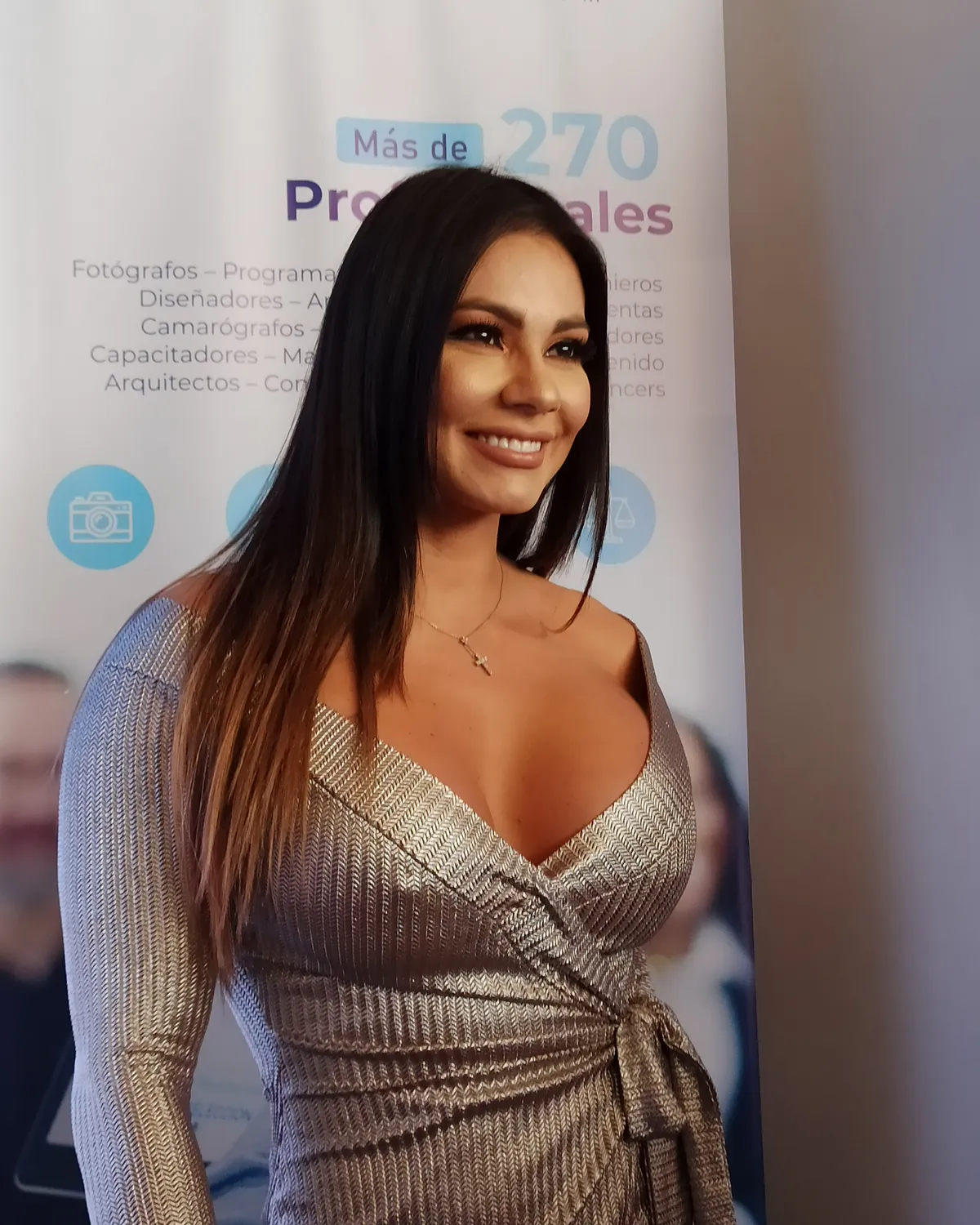
Key facts
- Who: Esperanza Gómez Silva, Colombian adult film actress, model, businesswoman and designer, born May 18, 1980, in Belalcázar, Caldas (Wikipedia (Spanish))
- Before film: Lingerie campaigns from age 16; graduated in fashion design; Miss Playboy TV Colombia 2006 (El Espectador; Vanguardia)
- Debut: August 25, 2009, with South Beach Cruisin’ 3, under her real name (El Espectador; Wikipedia (Spanish))
- The case: Meta deleted her Instagram account with more than five million followers in 2021; she filed a tutela (constitutional complaint) (El Espectador)
- The ruling: Sentence T-256 of 2025 found Meta violated her rights to free expression, due process and equality, the Court’s first full ruling on content moderation and influencers’ rights (Constitutional Court)
Every performer I know has the same nightmare. You spend years building an audience on a social platform, and one morning it’s gone. No warning, no clear explanation, no human being to talk to. Most of us complain on another platform and start again from zero. Esperanza Gómez did something different. She sued Meta, one of the biggest companies in the world, and after four years of legal fights she won a ruling from Colombia’s Constitutional Court that now tells Meta how it must treat users there.
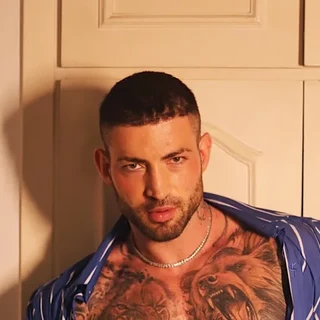
I’ve been in this industry for 14 years. I’m one of the most-searched male performers in the world, and I’ve worked with most of the top actresses of my generation. This column isn’t about any scene with her. It’s about her public story, from the sources, and then my take on why her case matters for every adult performer and creator, in Colombia and everywhere else.
From Belalcázar to Miss Playboy TV
Esperanza Gómez was born and raised in Belalcázar, a town in the Colombian department of Caldas (Wikipedia (Spanish)). She dreamed of modeling as a child, but she first tried university. In a 2014 interview with Vanguardia she explained that she started in agronomy until people told her that kind of work “impoverishes” you, so she switched to veterinary school. Then, in the first classes, she was told she would have to put down an animal if it arrived badly hurt. “I quit. I’m someone who wouldn’t kill a fly,” she said (translated from Spanish). She went on to graduate in fashion design while working on runways (Vanguardia).
At 16 she was already appearing in advertising campaigns (El Espectador), especially for lingerie (Wikipedia (Spanish)). Her path to Playboy was almost an accident. A modeling agency asked her to help fill a casting as an extra. “At first I said no, but then I helped. They took some photos,” she told Vanguardia. “A month later they told me I had won the contest” (translated from Spanish). She became Miss Playboy TV Colombia and went on to the international final in Mexico City with ten other representatives from Latin America, Spain and Portugal (Vanguardia). Wikipedia and El Espectador date her win to 2006 (Wikipedia (Spanish); El Espectador).
Her family wasn’t easy about it. Her mother always supported her modeling, but her father felt ashamed every time he saw her in lingerie on TV or in magazines. “They were two very difficult years of my career,” she said. “In Colombia we are very reserved about this subject” (translated from Spanish). Little by little, she said, he got used to it (Vanguardia).
Too shy for Los Angeles, a star in Miami
She told El Espectador she had always been interested in adult film, but it was only with her husband’s support that she decided to try. Vanguardia reported that it was her husband who paid for the plane tickets to Los Angeles (Vanguardia). It didn’t work at first. In Los Angeles she was rejected for being “too shy.” It was during a stay in Miami that the doors opened (El Espectador).
She debuted on August 25, 2009, with South Beach Cruisin’ 3, directed by Josh Stone, at the age of 29 (El Espectador; Wikipedia (Spanish)). One decision made her different from almost everyone else: she didn’t use a pseudonym. She has said she is one of the first porn actresses who isn’t afraid of what people say about her, which is why she uses her own name in her films (Wikipedia (Spanish)). Contexto magazine described her as one of the first Colombian women to succeed in adult film, and noted she did it “without blushing, using her own name” (Contexto).
In a 2016 radio appearance announcing a live-streamed film project, she used the moment to talk about women’s role in sex. “Women are not at the service of men, we are not a piece of meat at anyone’s disposal,” she said, adding that the scenes in her films are fantasies and that sex isn’t the way the industry shows it (translated from Spanish) (El Espectador).
A business built on followers
Like many performers, she turned her fame into a business: clothing, brand deals and social media. In 2021 she told Contexto she was in Cali to close a partnership and continue a clothing project she had started before the pandemic. The same article noted she had recently made news by announcing scholarships, with a foundation, so that a thousand young people could finish high school (Contexto).
The engine of that business was Instagram. And it was fragile. Back in 2017 she lost an account with almost three million followers. “I started from zero again,” she told La W, explaining that she might not sign some contracts because brands would check her numbers (translated from Spanish) (Pulzo).
The 2021 shutdown
By 2021 she had rebuilt a verified account with more than five million followers. Before closing it, Instagram had already deleted several of her posts for supposedly containing “adult sexual services” or “nudity.” Then it closed the account, saying she had broken its community rules by allegedly offering sexual services (El Espectador). Semana put the account at 5.7 million followers and the closure in May 2021 (Semana); El Espectador dated it to June 2021 (El Espectador).
Her argument was simple. “In the photos I was censored for, I’m not completely naked in any of them. I’m wearing underwear, it’s not even see-through,” she told La W. “Sensuality yes, but for years they’ve been censoring the word sensuality, when sensuality is not pornography.” And: “I don’t offer sexual services on this platform because I’m not a prostitute, I’m a porn actress who provides a service to an internationally recognized company protected by law” (translated from Spanish) (Caracol Radio).
She also told Semana that after the verified profile was closed, she created another one, and that one, with 400,000 followers, was also cancelled “without having published pornographic or explicit content” (translated from Spanish) (Semana). She has connected the reporting campaign against her account to an interview she gave journalist Vicky Dávila, where she says she was asked about a politician and “didn’t give the answers they were perhaps expecting” (El Tiempo). That is her interpretation; the Court’s ruling focused on Meta’s lack of transparency and unequal treatment, not on who reported her.
“You’re an ant next to a giant”
She told La Kalle radio in 2026 that she kept screenshots of every removal and every appeal, because Instagram itself often reversed its own decisions. “Every time I appealed a photo or a post they took down, Instagram would later say: ‘We’re sorry, your post or your story does not violate the community guidelines’” (translated from Spanish). Many lawyers told her not to bother. “You’re an ant next to a giant,” she remembered being told (El Tiempo).
She filed a tutela, the Colombian constitutional complaint, against Facebook Colombia and Meta Platforms (Constitutional Court). The case reached the Constitutional Court, which held a technical hearing on November 15, 2022, with Meta, Facebook Colombia, academics and free-expression experts. There she said her right to work was being violated: “I showed activities like cooking, having a healthy diet, I uploaded photos in underwear, in bikinis, and they censored all of them… Brands look at my followers, and before I had 5 million, now I only have 600,000” (translated from Spanish) (Caracol Radio).
Then came a setback. On January 30, 2023, the Court’s First Review Chamber annulled the proceedings, including hearings and statements, because the first-instance judge had notified Meta at its office in Colombia instead of in the United States. Meta said it received court notifications physically in the U.S. and had no email for them in Colombia (El Espectador; Constitutional Court, Auto 064/23). The case had to start again.
Sentence T-256 of 2025
On June 12, 2025, the First Review Chamber, with Justice Natalia Ángel Cabo writing, issued Sentence T-256 of 2025 (Constitutional Court). In its September 2025 press bulletin, the Court said it found that Meta had violated her fundamental rights “by deleting her Instagram account with more than five million followers without a transparent and clear justification and without giving her equal treatment compared with profiles with similar posts,” and called it “the first time the Court has comprehensively addressed the relationship between influencers’ fundamental rights and content moderation” (translated from Spanish) (Constitutional Court).
The key passage, for me, is this one from the ruling: it is legitimate for a platform to restrict certain content, “but in principle there is no reason to give a different and more severe treatment to women who have worked in pornography,” and if a platform uses offline behavior in its moderation policies, “this must be explicit and transparent, and cannot consist of discriminatory criteria” (translated from Spanish) (Constitutional Court). The Court also found the closure discriminatory because Meta applied its nudity and sexual services policies inconsistently compared with other accounts with similar content that are still active (Constitutional Court).
It did not give her the account back. The Court said it was no longer possible to restore it and declared the matter moot as an accomplished fact, which allows her to go to the ordinary courts for damages. But it gave Meta several orders: create a visible electronic channel for court notifications in Colombia; make its policies available in Spanish on a unified website; and revise Instagram’s terms and privacy policy so users clearly understand how to challenge moderation decisions. It also urged Meta to define its rules on implicit sexual content more precisely and asked its Oversight Board to issue an advisory opinion on moderating adult nudity and sexual activity, especially the use of offline conduct as a moderation criterion (Constitutional Court).
The fight isn’t completely over. In 2026 she said her team had to file a contempt (desacato) proceeding because, in her account, Meta had not fully complied, especially with the notification channel in Colombia (El Tiempo).
What every performer can learn from Esperanza Gómez
- Keep evidence of everything. Her screenshots of reversed removals became her case.
- Know your rights as a user. Platforms have rules, but in her words, users have rights too.
- Don’t build only on rented land. She lost almost three million followers in 2017 and five million in 2021.
- Your name can be your brand. She never hid behind a pseudonym, and it made her impossible to erase.
- Fight for the precedent, not just yourself. The orders she won now help every Instagram user in Colombia.
My Take (opinion — Maximo Garcia)
I’ll say it directly: this is one of the most important legal wins for adult performers anywhere in the world, and most people in our industry outside Latin America have never heard of it.
Here’s why. Every performer and creator knows that platforms treat us differently. A mainstream influencer can post a bikini photo and get a million likes. We post the same photo and get a warning, a deleted post, or a closed account. We all suspected it was because of what we do off the platform, but nobody could prove it, and nobody had a court say it out loud. Now a constitutional court has written that there is “no reason to give a different and more severe treatment to women who have worked in pornography.” That sentence is going to be quoted in a lot of future cases.
The second reason it matters is the boring part, and boring is where power lives. The orders about a notification channel in Colombia and policies in Spanish sound small. But think about her situation: her case was annulled in 2023 because nobody knew where to legally notify Meta. If a famous woman with lawyers and five million followers almost lost on a technicality, imagine a small creator. Making the giant reachable is half the battle.
And I respect that she went on Colombian radio and in the national press and said “I’m a porn actress” without apology, using her real name, in a country she herself described as very reserved. That takes more courage than anything we do on set. I write a lot about protecting your brand and not depending on one platform at maximogarciaworld.com, and her story is the perfect warning and the perfect example at the same time.
If you’re interested in performers who fought back against platforms, harassment and stigma, or turned their fame into a public voice, read my columns on Cherie DeVille, who used her platform to run a political campaign; Nikita Bellucci, who took on online harassment in France; Siri Dahl, who fights for creators’ rights; and Mia Khalifa, who rebuilt herself as an influencer.
👉 More from me at maximogarciaworld.com · Want the full collection? Subscribe at fuckingpornstars.net
FAQ
Who is Esperanza Gómez?
Esperanza Gómez Silva is a Colombian adult film actress, model, businesswoman and designer born in Belalcázar, Caldas, on May 18, 1980. She won Miss Playboy TV Colombia in 2006 and debuted in adult film in 2009, using her real name (Wikipedia (Spanish); El Espectador).
Why did Instagram close Esperanza Gómez’s account?
Meta closed her account, which had more than five million followers, in 2021, saying she had broken its community rules on adult sexual services and nudity. She argued the photos showed her in underwear, like many other influencers, and never offered sexual services (El Espectador; Caracol Radio).
What did Colombia’s Constitutional Court decide?
In ruling T-256 of 2025, the Court found that Meta violated her rights to freedom of expression, due process and equality by deleting her account without a transparent justification and by treating her more harshly than similar accounts. It ordered Meta to create a channel for court notifications in Colombia, publish its policies in Spanish and clarify how users can appeal moderation decisions (Constitutional Court).
Did Esperanza Gómez get her Instagram account back?
No. The Court found it was no longer possible to restore the account and declared the issue moot as an accomplished fact, which leaves her free to seek damages in the ordinary courts (Constitutional Court).
How we fact-checked this
Every fact was checked against the sources below; quotes from Spanish-language sources are our translations. Sources differ on some dates: her account closure is dated May 2021 by Semana and June 2021 by El Espectador, and Contexto dates her debut to 2008 while El Espectador gives August 25, 2009. Her claim of a political motive behind the reports is presented as her own view. Personal health and family matters reported elsewhere were deliberately left out, and explicit content was omitted to keep this page SFW. Opinions are Maximo Garcia’s own and are labeled as such.
Sources
- Corte Constitucional de Colombia: Boletín No. 172, Sentencia T-256 de 2025 (Sep 12, 2025) — https://www.corteconstitucional.gov.co/noticias/29743
- Corte Constitucional de Colombia: Sentencia T-256 de 2025 (Jun 12, 2025) — https://www.corteconstitucional.gov.co/relatoria/2025/t-256-25.htm
- Corte Constitucional de Colombia: Auto 064 de 2023 — https://www.corteconstitucional.gov.co/relatoria/autos/2023/a064-23.htm
- El Espectador: “El lío judicial por la cuenta de Instagram de Esperanza Gómez vuelve a comenzar” (Feb 23, 2023) — https://www.elespectador.com/judicial/el-lio-judicial-por-la-cuenta-de-instagram-de-esperanza-gomez-vuelve-a-comenzar/
- El Espectador: “Esperanza Gómez anunció que va a hacer la primera película porno en vivo” (Jun 16, 2016) — https://www.elespectador.com/actualidad/esperanza-gomez-anuncio-que-va-a-hacer-la-primera-pelicula-porno-en-vivo-article-638229/
- Caracol Radio: “Esperanza Gómez en la Corte Constitucional contra Instagram: ‘Me están vulnerando’” (Nov 15, 2022) — https://caracol.com.co/2022/11/15/esperanza-gomez-en-la-corte-constitucional-contra-instagram-me-estan-vulnerando/
- Caracol Radio: “Esperanza Gómez: ‘en las fotos que me censuran no estoy desnuda’” (Nov 16, 2022) — https://caracol.com.co/2022/11/16/esperanza-gomez-en-las-fotos-que-me-censuran-no-estoy-desnuda/
- Semana: “Esperanza Gómez relaciona el cierre de su cuenta en Instagram con sus mensajes a la primera línea” (Nov 16, 2022) — https://www.semana.com/semana-tv/vicky-en-semana/articulo/esperanza-gomez-relaciona-el-cierre-de-su-cuenta-en-instagram-con-sus-mensajes-a-la-primera-linea-a-donde-estamos-llegando/202242/
- El Tiempo: “Esperanza Gómez revela el momento cuando empezaron a denunciarle su cuenta de Instagram y cómo ganó demanda” (May 29, 2026) — https://www.eltiempo.com/cultura/gente/esperanza-gomez-revela-el-momento-en-que-empezaron-a-denunciarle-su-cuenta-de-instagram-y-como-gano-demanda-3559413
- Pulzo: “Esperanza Gómez perdería contratos por su vocabulario en Instagram, no por sus fotos” (Nov 3, 2017) — https://www.pulzo.com/entretenimiento/esperanza-gomez-explica-razones-por-cerraron-su-cuenta-instagram-PP380353
- Vanguardia: “El día que la reina colombiana del porno estuvo en Bucaramanga” (Jul 9, 2014) — https://www.vanguardia.com/santander/region/2014/07/09/el-dia-que-la-reina-colombiana-del-porno-estuvo-en-bucaramanga/
- Contexto: “‘El buen sexo sabe a gloria’: Esperanza Gómez” (John Better, Jul 22, 2021) — https://contextomedia.com/el-buen-sexo-sabe-a-gloria-esperanza-gomez/
- Wikipedia (Spanish): Esperanza Gómez — https://es.wikipedia.org/wiki/Esperanza_G%C3%B3mez